-KMU Office of Research and Development-
Team Members: Wei-Peng Li、Wen-Jyun Wang、Shubham Singh、Pooja Aich、Chia-Yi Cheng、Ting-Chi Lo、Fang-Yi Hsu、Jia-Sin Chen
The Innovative Nanomedicine Laboratory applies advanced nanotechnology to tackle contemporary medical challenges through creative material design and interdisciplinary collaboration. This year, the laboratory developed an amino acid–modified copper oxide electrode for ketone metabolite detection (Langmuir, 2025) and catalytic nanomaterials capable of releasing oxygen and nitric oxide to promote wound healing (ACS Appl. Bio Mater., 2025). In collaboration with Prof. Akihiro Okamoto, the team established the liposome fusion-induced membrane exchange (LIME) platform for large-scale production of functional extracellular vesicles, published in Nano Today (2025). Building on this, collaborative work with Prof. Chen-Sheng Yeh led to the creation of electroactive membrane-coated nanoparticles for tumor therapy (Nat. Commun., 2025) and similar electroactive vesicles were applied for apoptosis detection (Adv. Mater., 2025), earning the 2025 Future Tech Award.
Breast cancer-targeting vesicles with excellent tumor specificity were further developed, opening new avenues for next-generation targeted therapies. In parallel, collaboration with Prof. Chia-Hsiang Chen resulted in a fluorescence-quenching bacterial detection system (J. Mater. Chem. B, 2024), which received U.S. provisional patent protection and KMU Spark Program support. Together with Prof. Yi-Hsin Chien, a gene methylation detection method was also reported, featured as a Small (2025) cover article.
The ongoing mission of the laboratory is to pioneer next-generation nanomedicines and diagnostic technologies, advancing Taiwan's biomedical innovation.
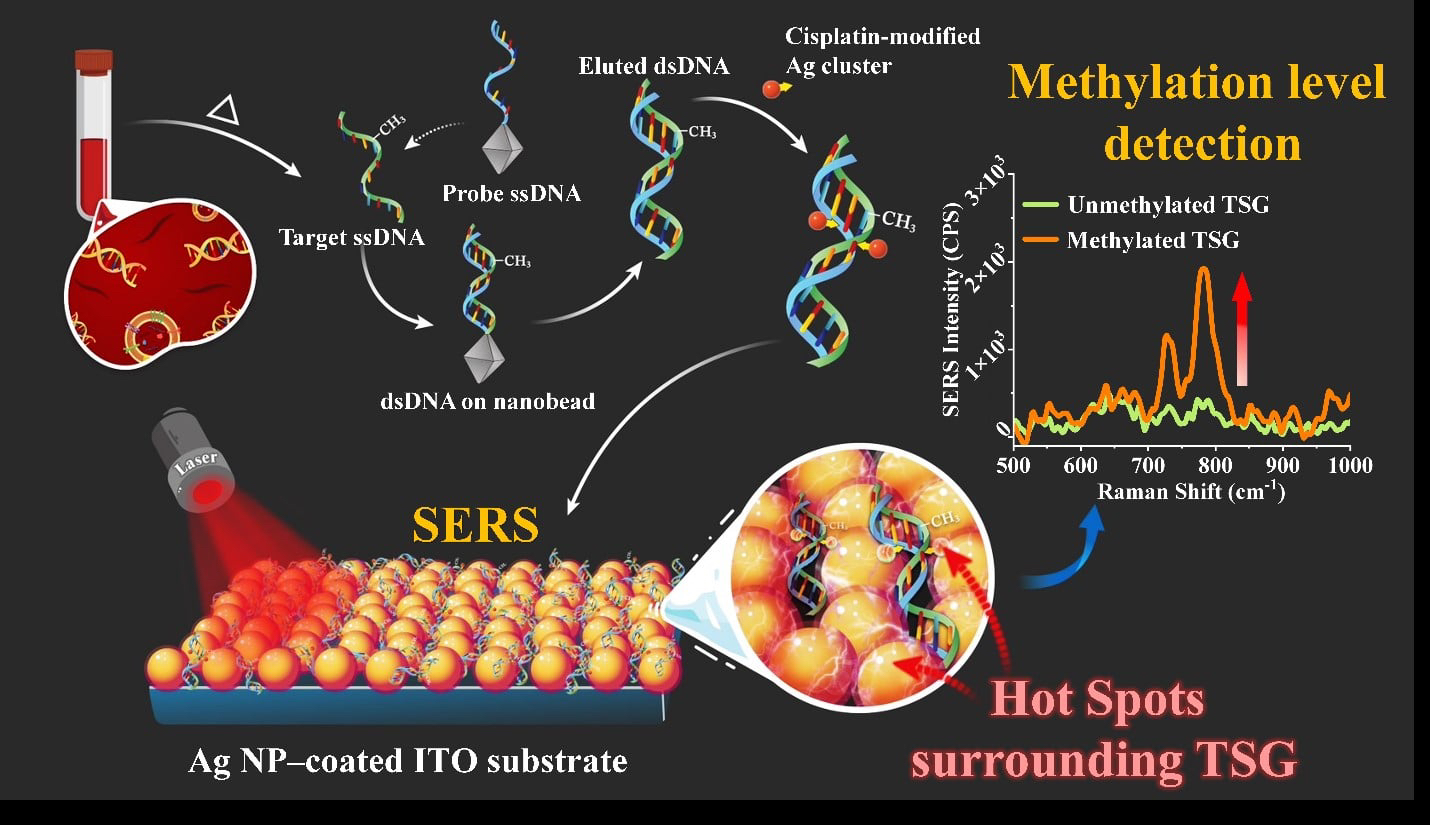
Figure 1. Magnetic isolation of TSGs and precise methylation detection by using an Ag-adduct-based SERS technique.
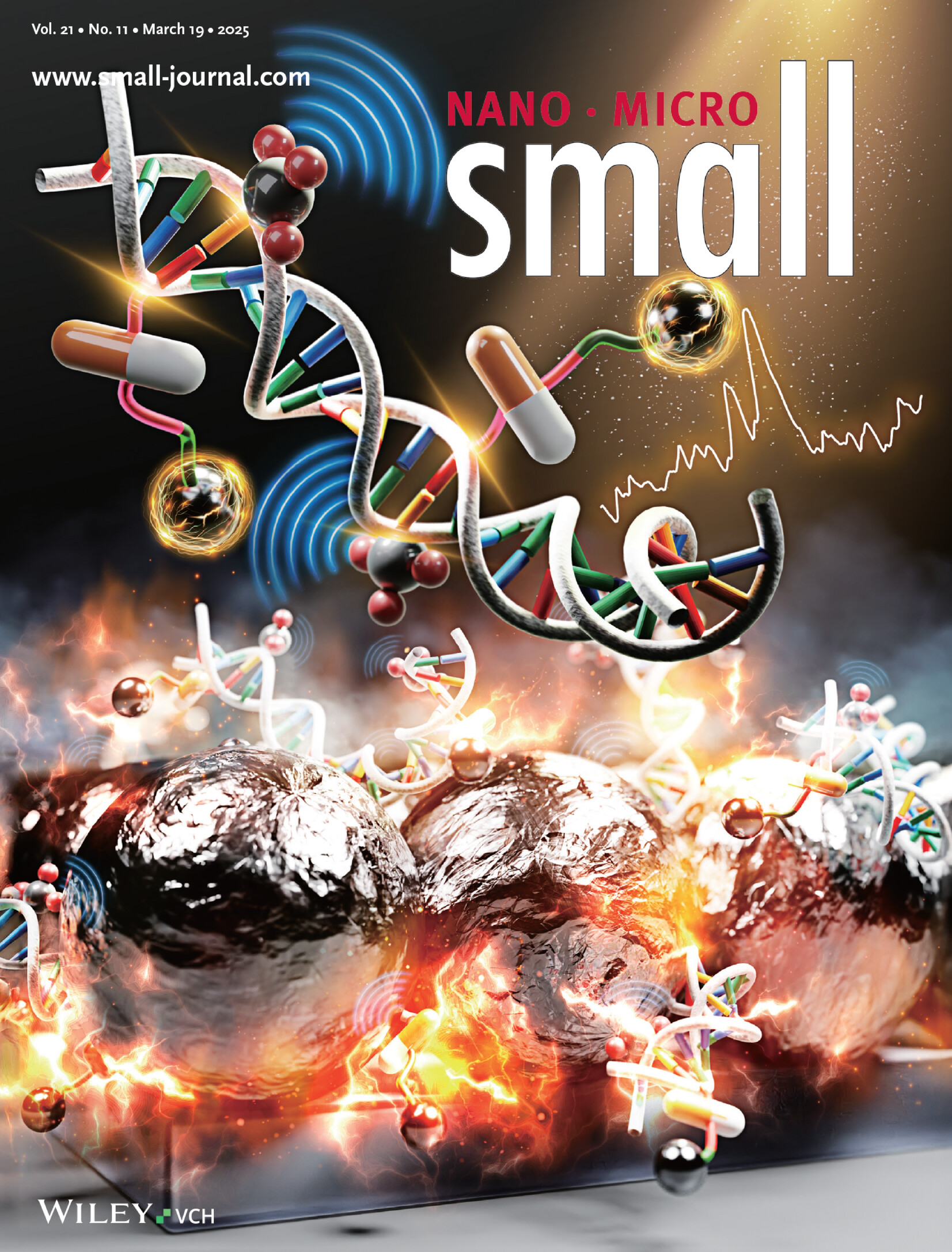
Figure 2. Small (2025) cover article
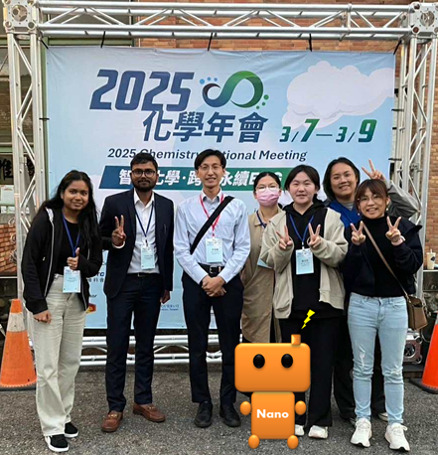
Figure 3. Research Team Photo