Infection Control Office, KMU Gangshan Hospital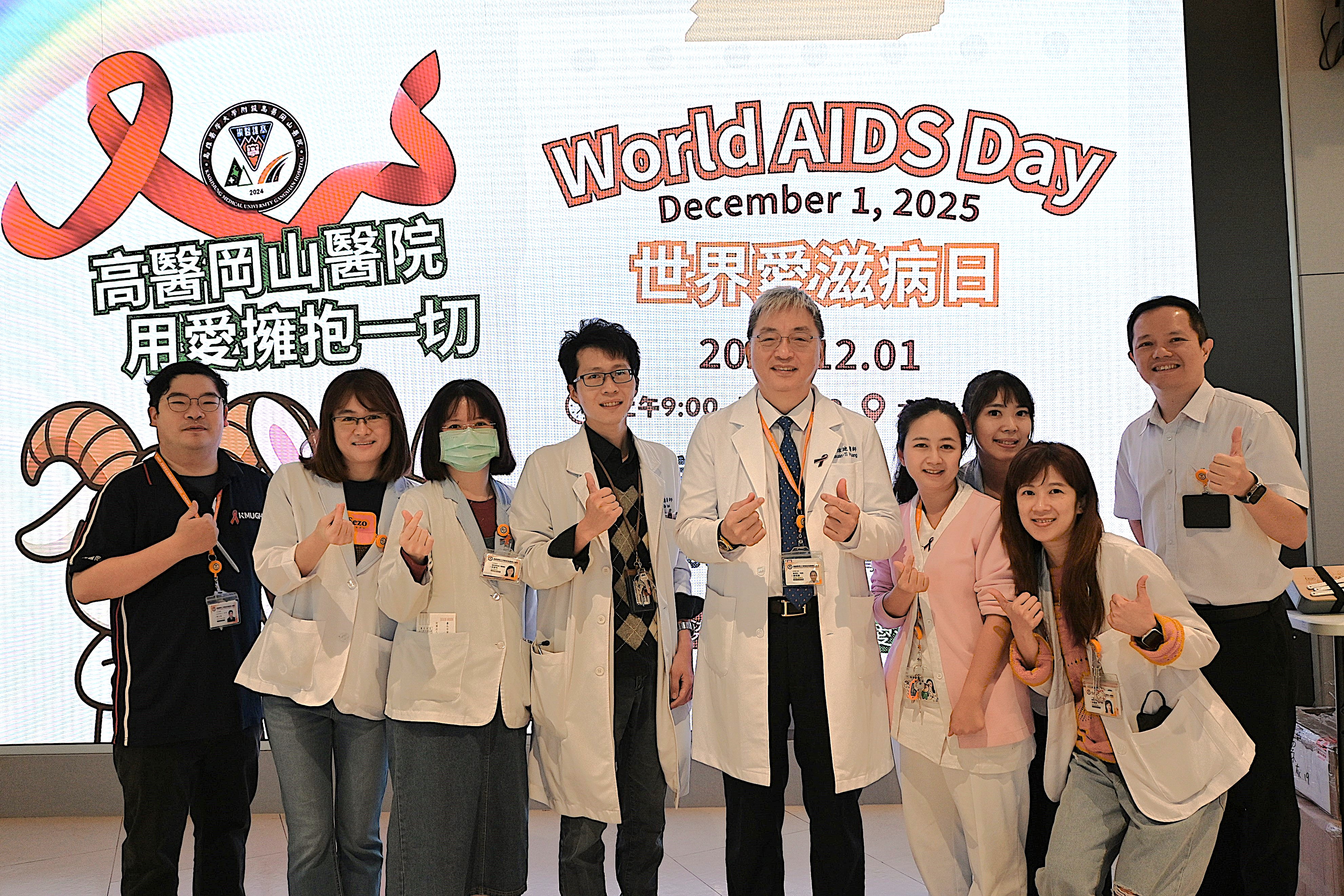
KMU Gangshan Hospital held a World AIDS Day event. Hospital Director Huang Hsuan-Ti (fifth from left) and Dr. Tsai Yu-Te, Head of the Division of Infectious Diseases
(fourth from left), called on healthcare staff to join in promoting stigma-free, HIV-friendly care.
December 1 is World AIDS Day. KMU Gangshan Hospital introduced a range of HIV-friendly healthcare services and hosted a public health education campaign in the hospital lobby. The event featured three interactive, game-style stations themed “How HIV is transmitted,” “U=U (Undetectable = Untransmittable),” and “World AIDS Day.” Through hands-on activities and prize quizzes, participants learned accurate HIV information in a relaxed setting, drawing many visitors to stop by and take part.
Hospital Director Huang Hsuan-Ti noted that HIV has long since shifted from a once-feared disease to a chronic condition that can be managed over the long term. “Fear comes from not understanding; understanding brings respect,” he said. Backed by scientific evidence and modern medicine, as long as a person living with HIV receives regular treatment and their viral load becomes undetectable, they will not transmit HIV through sexual activity. He called on society to view people living with HIV with equality and to create a healthcare environment that is free of discrimination and safe to seek care in.
Dr. Tsai Yu-Te, Head of the Division of Infectious Diseases, said that to avoid placing additional pressure on people living with HIV, KMU Gangshan Hospital has designed an innovative, patient-friendly care pathway spanning registration, consultation, blood draws, and medication pickup. Through concrete actions, the hospital is upholding the core spirit of zero-discrimination healthcare and aims to become an HIV-friendly model hospital for the Greater Gangshan area in northern Kaohsiung—ensuring care that is safe, comprehensive, and delivered with dignity.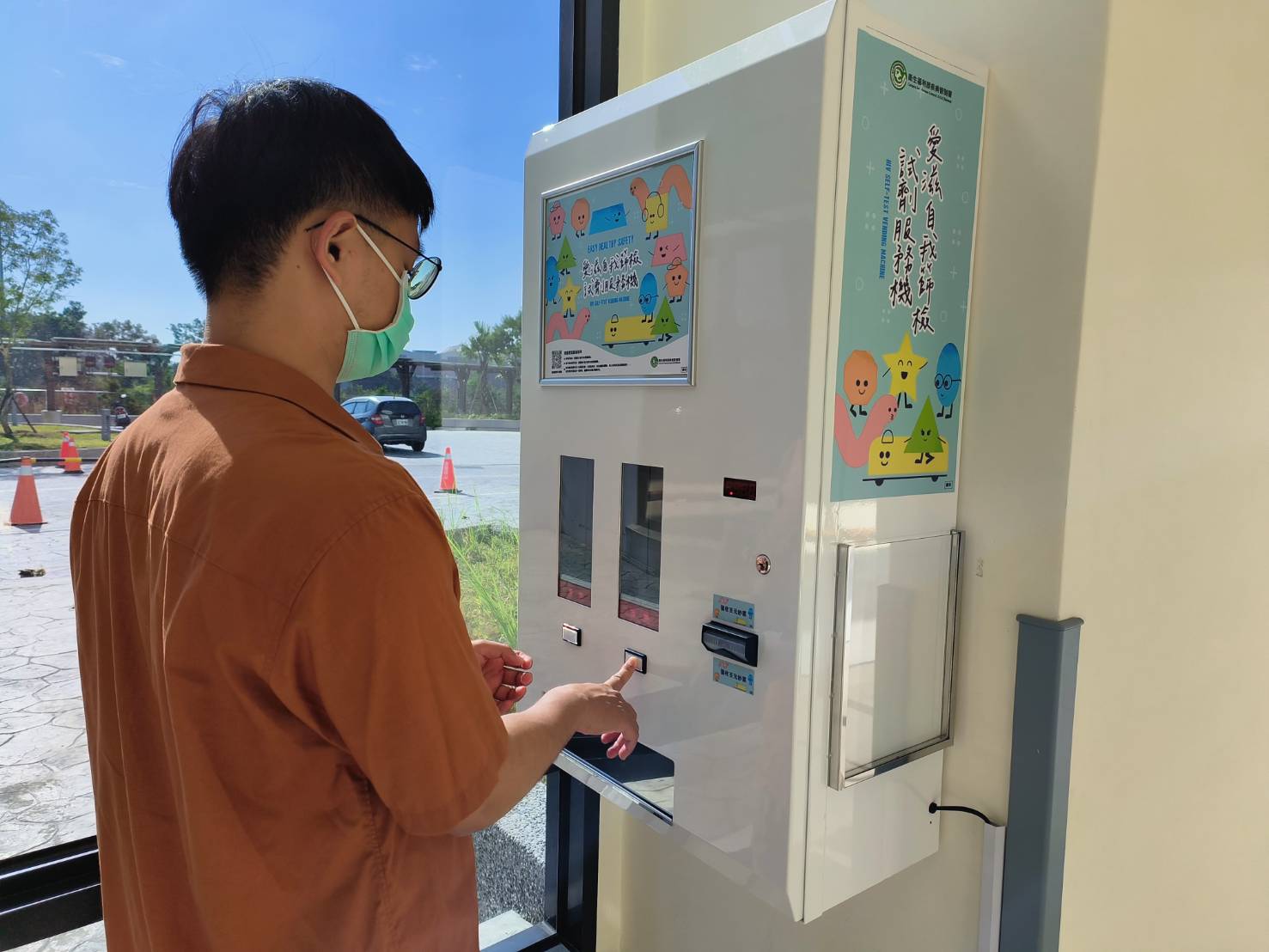
In addition to anonymous testing services, KMU Gangshan Hospital has installed a “self-test kit vending machine” on campus, allowing the public to manage their health without pressure.
To help the public feel confident about testing and care, the hospital provides anonymous HIV testing services (appointment link: https://www.redribbon.tw/kmugh/) and has installed a self-test kit vending machine on campus offering both saliva-based and blood-based test kits. This enables people to monitor their health in a safer, more autonomous, and stress-free way. At the same time, the hospital is actively expanding PrEP (pre-exposure prophylaxis) and PEP (post-exposure prophylaxis) services, helping those in need access evidence-based and effective prevention. With appropriate medical intervention, the risk of HIV infection can be significantly reduced.
In addition, to foster an HIV-friendly healthcare culture and demonstrate its commitment to HIV prevention and zero-discrimination care, the hospital held special activities for staff that day, including video screenings, a review of HIV prevention achievements, and a sharing session on future plans. A supportive “Rainbow Cards” area was also set up, inviting staff to reflect on how to practice friendly care in daily work and to review whether internal processes meet standards for patient-centered care, privacy protection, and non-discrimination—further enhancing healthcare workers’ awareness and sensitivity regarding HIV-related issues.
Dr. Tsai added that HIV treatment has made tremendous progress in recent years. Treatment has evolved from complex regimens with more pronounced side effects to approaches that are often “one pill a day” with fewer side effects, and long-acting injectable options are also available. He emphasized that “HIV treatment has entered a new era, and people living with HIV can enjoy a quality of life no different from that of the general population.”