– Kaohsiung Medical University Chung-Ho Memorial Hospital –
Kaohsiung Medical University Chung-Ho Memorial Hospital (hereafter referred to as KMUH) continues to lead the advancement of smart healthcare through cutting-edge technology. On January 23, KMUH held the launch ceremony for its “NVIDIA B300 GPU High-Performance Computing Platform,” becoming the first medical institution in Taiwan to deploy the next-generation NVIDIA B300 GPU server. This milestone significantly strengthens the hospital’s AI computing capabilities in response to the explosive global growth of medical AI applications, setting a new benchmark for smart healthcare development in Taiwan.
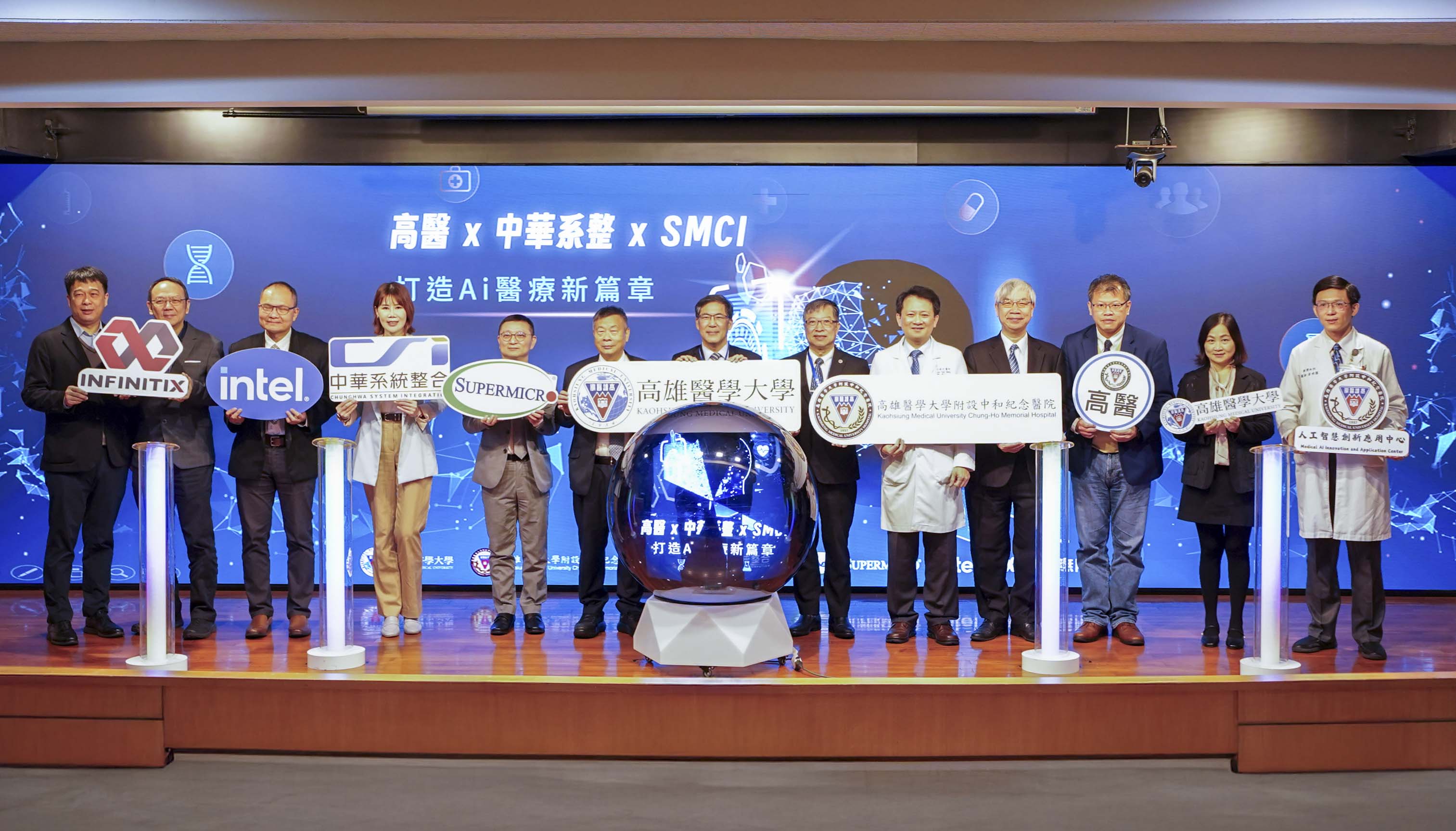
The launch ceremony brought together distinguished guests included Chairman Chien-Chih Chen of the Kaohsiung Medical University Board of Directors, President Ming-Lung Yu of Kaohsiung Medical University, Superintendent Jaw-Yuan Wang of KMUH, Chairman Ming-Te Wu of Chunghwa System Integration Co., Ltd., and General Manager Chen-Wei Lin of Supermicro. Together, they lit the ceremonial activation sphere, symbolizing the official launch of a new era in smart healthcare and demonstrating KMUH’s strong commitment to collaborating with global technology leaders to accelerate the real-world implementation of AI in medicine.
KMUH has long been dedicated to advancing smart healthcare and has earned high recognition both domestically and internationally. In 2025, the hospital once again received the “Smart Hospital – Enterprise-Wide Certification,” the Smart Healthcare Excellence Award, and the ESG Special Award at the 25th National Healthcare Quality Award (NHQA). It also achieved Stage 7 certification—the highest level—under the HIMSS Electronic Medical Record Adoption Model (EMRAM). Furthermore, KMUH was named among Newsweek and Statista’s “World’s Best Smart Hospitals 2026.”
In addition, the hospital’s AI Innovation Center developed the generative AI platform “KMU Genie,” which received multiple prestigious honors in 2025, including the Future Tech Award, the 21st National Innovation Award, the 5th Digital Transformation Award – Healthcare Innovation Model Award, and the AI Healthcare Leadership Award from Storm Media. These achievements highlight KMUH’s strong R&D capabilities, clinical integration expertise, and international competitiveness in smart healthcare and generative AI.
President Ming-Lung Yu highlighted the longstanding collaboration and shared growth between Kaohsiung Medical University and KMUH. The launch of this AI computing platform represents not only a major upgrade in hospital-wide computational capacity but also a significant milestone in integrating industry, academia, research, and clinical medicine. The university cultivates future talent in healthcare and technology, while the hospital translates knowledge and innovation into clinical practice—together positioning KMUH as a key hub for medical innovation and technological advancement.
Following its early adoption of the NVIDIA H200 GPU server in May 2025 to enhance clinical decision-making, KMUH now leads again with the introduction of the NVIDIA B300 GPU server. The project, coordinated by Chunghwa System Integration, features the Supermicro SYS-422GS liquid-cooled system equipped with HGX B300 GPUs, delivering exceptional computing density and stability for high-performance computing (HPC), deep learning, and large language models (LLMs).
KMUH has also deployed the INFINITIX AI-Stack management platform to optimize GPU allocation and workload management, ensuring stable and efficient operation of LLMs and vision-language models (VLMs). This infrastructure enables clinical and research teams to focus on AI innovation and real-world clinical implementation, accelerating the translation of AI value into tangible improvements in patient care.
Superintendent Jaw-Yuan Wang emphasized that technology should not replace people but bring healthcare closer to them. In the face of rapid advancements in generative AI and large language models, KMUH approaches AI with the responsibility and prudence expected of a university-affiliated medical center—viewing it as a vital tool to support clinical decision-making, enhance patient safety, and reduce the burden on healthcare professionals, rather than as a mere technological showcase.
The launch of the NVIDIA B300 GPU platform marks a significant enhancement in computational capacity and a key milestone in advancing hospital-wide smart healthcare. With a stable and scalable AI infrastructure, KMUH will further develop advanced applications including medical imaging interpretation, clinical decision support, patient risk prediction, and personalized treatment recommendations. By integrating next-generation sequencing (NGS) with AI platforms, the hospital aims to improve the precision and efficiency of prevention, diagnosis, and follow-up management for diseases such as colorectal cancer.
The implementation of the AI-Stack management platform promotes cross-departmental resource sharing while ensuring stability and security. The adoption of energy-efficient liquid cooling systems also reflects KMUH’s commitment to intelligent carbon reduction and sustainable governance—advancing smart healthcare in alignment with ESG principles and building a patient-centered hospital that embraces environmental responsibility.
In clinical practice, KMUH’s colorectal surgery team has partnered with leading domestic enterprises—including Advanced Intelligent Systems, Ruilin Biotechnology, and Deep Insight Technologies—to establish a “One-Stop AI-Powered Colorectal Cancer Prevention and Care Platform Based on Next-Generation Sequencing.” The project was awarded NT$10 million in funding under the National Science and Technology Council’s 2025 Smart Healthcare Industry-Academia Alliance Program.
Built on an integrated “point-line-surface” framework, the initiative enhances screening rates, refines precision treatment strategies, and incorporates AI-driven postoperative follow-up management. By introducing NGS testing equipment and panels, KMUH is establishing a comprehensive genomic-clinical data integration platform that serves as a core database for AI model development. This foundation supports the training and modeling of multimodal data—including digital pathology, endoscopy, and genomic sequencing—while enabling the development of intelligent customer service systems and shared decision-making tools to deliver more advanced and socially impactful smart healthcare services.
Looking ahead, KMUH will continue strengthening data governance, cybersecurity, and regulatory compliance frameworks to build a replicable and scalable smart healthcare model. Through interdisciplinary collaboration across academia, industry, research, and clinical practice, KMUH is steadily advancing toward its vision of a patient-centered smart hospital that balances innovation with sustainable development.
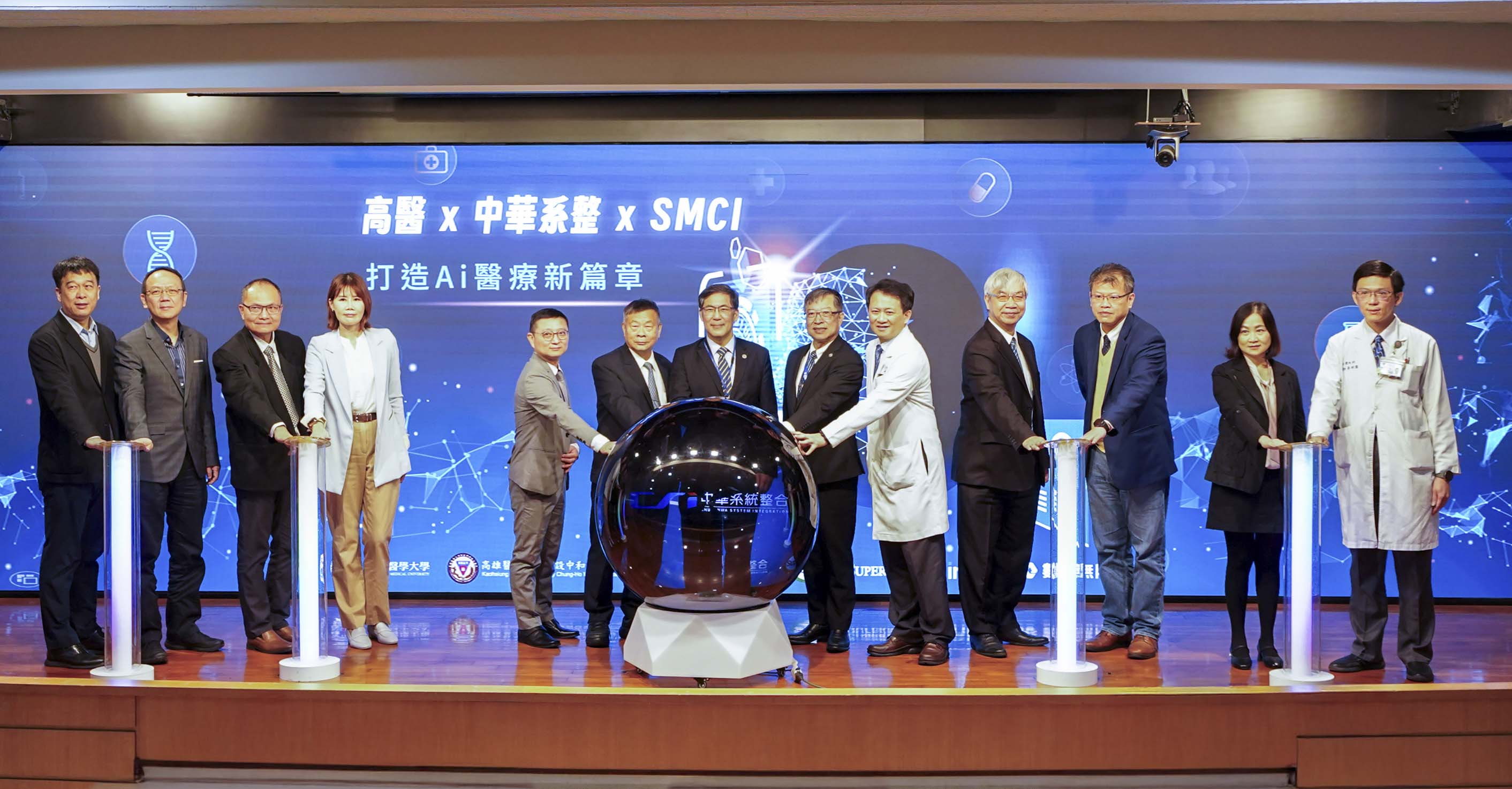
KMUH officially launches the NVIDIA B300 GPU high-performance computing platform, symbolizing the dawn of a new era in smart healthcare and marking a significant milestone in Taiwan’s medical AI development.
From clinical, research, IT, to administrative teams, KMUH is united in advancing hospital-wide smart healthcare, ensuring AI is deeply integrated into clinical practice.
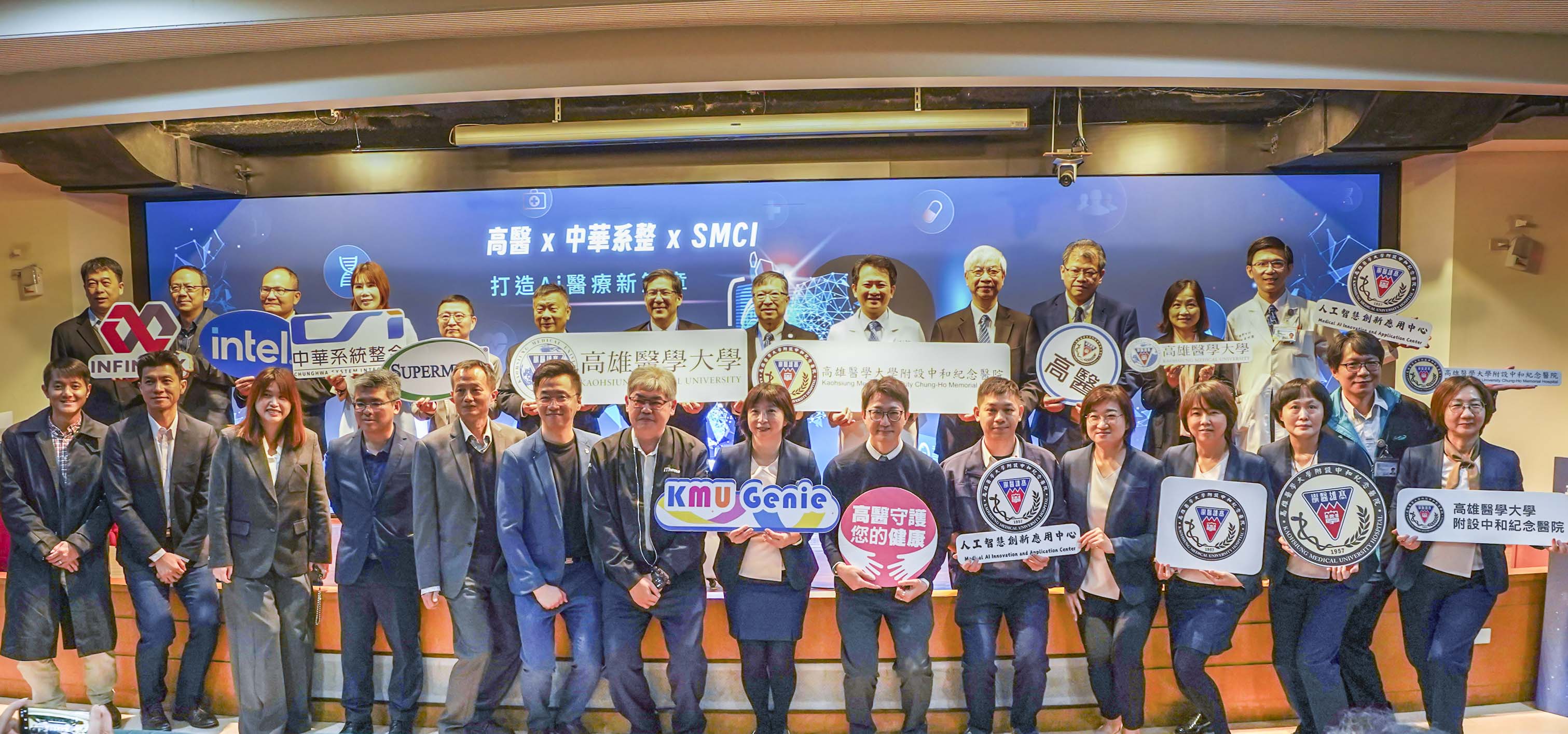
KMUH collaborates with NVIDIA, ecosystem partners, and leading domestic technology teams to build a high-performance, scalable AI healthcare infrastructure—demonstrating strong cross-sector integration across academia, industry, and medicine.