
College of Medicine/ Department of Anatomy
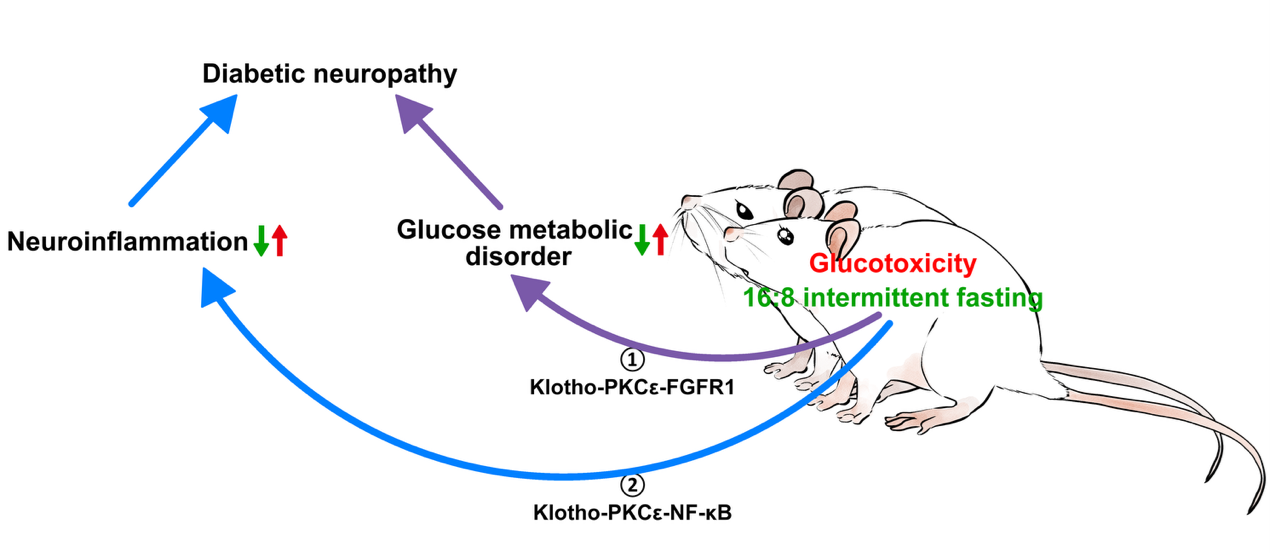
Figure 1. Graphical abstract
The study focused on exploring whether there is a simple, non-pharmacological approach, beyond insulin therapy (the current gold standard for Type 1 Diabetes, T1DM), that could help patients reduce their medication while simultaneously improving complications like the nerve pain associated with high blood sugar (Diabetic Neuropathy, DN). The study adopted the popular "16:8 Intermittent Fasting" (168if) protocol (16 hours of fasting followed by an 8-hour eating window within a day) as a dietary intervention and observed its effects across different age groups (young and elderly) in diabetic models.
The study found:
1. Timing is Crucial: Effective reduction in blood glucose levels was achieved only when the 168if protocol was implemented in the early stage of T1DM onset. If the intervention was started too late, the blood sugar-lowering effect was not observed.
2. Significant Benefits for Younger Individuals: For the younger diabetic models, starting 168if early not only effectively lowered blood sugar but also significantly alleviated symptoms of neuropathic pain (such as abnormal sensitivity to heat and touch). Further analysis revealed that fasting successfully upregulated the neuroprotective Klotho gene and suppressed signaling molecules that contribute to nerve damage and inflammation. This indicates that 168if can protect nerves by improving the body's anti-aging and anti-inflammatory mechanisms.
3. Caution for the Elderly Population: Although early fasting also lowered blood sugar in the elderly models, it was observed that this protocol was associated with a higher mortality risk in this older population. This serves as an important warning: this strict fasting method may not be suitable for elderly patients with diabetes.
In summary, the findings support that: For younger patients with Type 1 Diabetes, implementing 168 Intermittent Fasting as a simple dietary control aid in the early stage of the disease can effectively control blood sugar, potentially reduce reliance on medication, and alleviate the pain caused by diabetic neuropathy. Before practical application, all patients should consult with healthcare professionals to assess suitability and risks.
Chang, YS., Kan, YY., Chao, TN. et al. Reversing Neuronal Klotho Dysfunction–Mediated Diabetic Neuropathy Through 16:8 Intermittent Fasting. Mol Neurobiol 62, 9483–9496 (2025). https://doi.org/10.1007/s12035-025-04849-x