With advancements in imaging and ablation technologies, thyroid treatment is shifting from traditional surgery toward minimally invasive, tissue-preserving approaches. For patients with symptomatic benign thyroid nodules, ablation therapy offers a third option between surgery and long-term observation, achieving therapeutic effectiveness while reducing invasiveness and associated risks.
Dr. Huang Tzu-Yen, Director of the Department of Otolaryngology–Head and Neck Surgery at Kaohsiung Medical University Gangshan Hospital, explained that conventional thyroid surgery requires general anesthesia and hospitalization, and may result in complications such as hoarseness, hypocalcemia, or visible scarring. For patients with benign nodules that mainly cause discomfort due to size or compression, surgery is not always necessary.
Thyroid ablation is a minimally invasive treatment, commonly performed using radiofrequency or microwave ablation. These techniques use thermal energy to precisely destroy nodule tissue, which is gradually absorbed by the body, leading to shrinkage. The procedure is performed under local anesthesia with only a needle-sized puncture wound, allowing most patients to quickly resume normal daily activities. The Kaohsiung Medical University healthcare system has accumulated over 200 cases of thyroid ablation, with clinical outcomes demonstrating favorable results: nodule volume is reduced to approximately 16% of its original size on average, symptom improvement exceeds 90%, and normal thyroid function is effectively preserved.
Ablation therapy is particularly suitable for patients experiencing swallowing discomfort, a sense of neck compression, or cosmetic concerns due to benign nodules. Since the goal of treatment is to reduce nodule size and relieve symptoms—rather than completely remove the tissue—it minimizes complication risks while preserving more normal thyroid tissue and function. Regarding recurrence, Dr. Huang noted that if nodules regrow, ablation can be repeated and does not affect the possibility of future surgery. In other words, ablation does not replace surgery but provides patients with greater treatment flexibility.
In addition, the hospital has accumulated experience in performing ablation for a small number of microcarcinoma cases, achieving local disease control under careful evaluation and follow-up. However, such cases still require thorough professional assessment and ongoing monitoring. As healthcare moves toward personalized medicine, physicians tailor treatment plans based on tumor characteristics and patient needs. The rise of thyroid ablation represents a broader range of treatment options, enabling patients to achieve a better balance between therapeutic outcomes and quality of life.
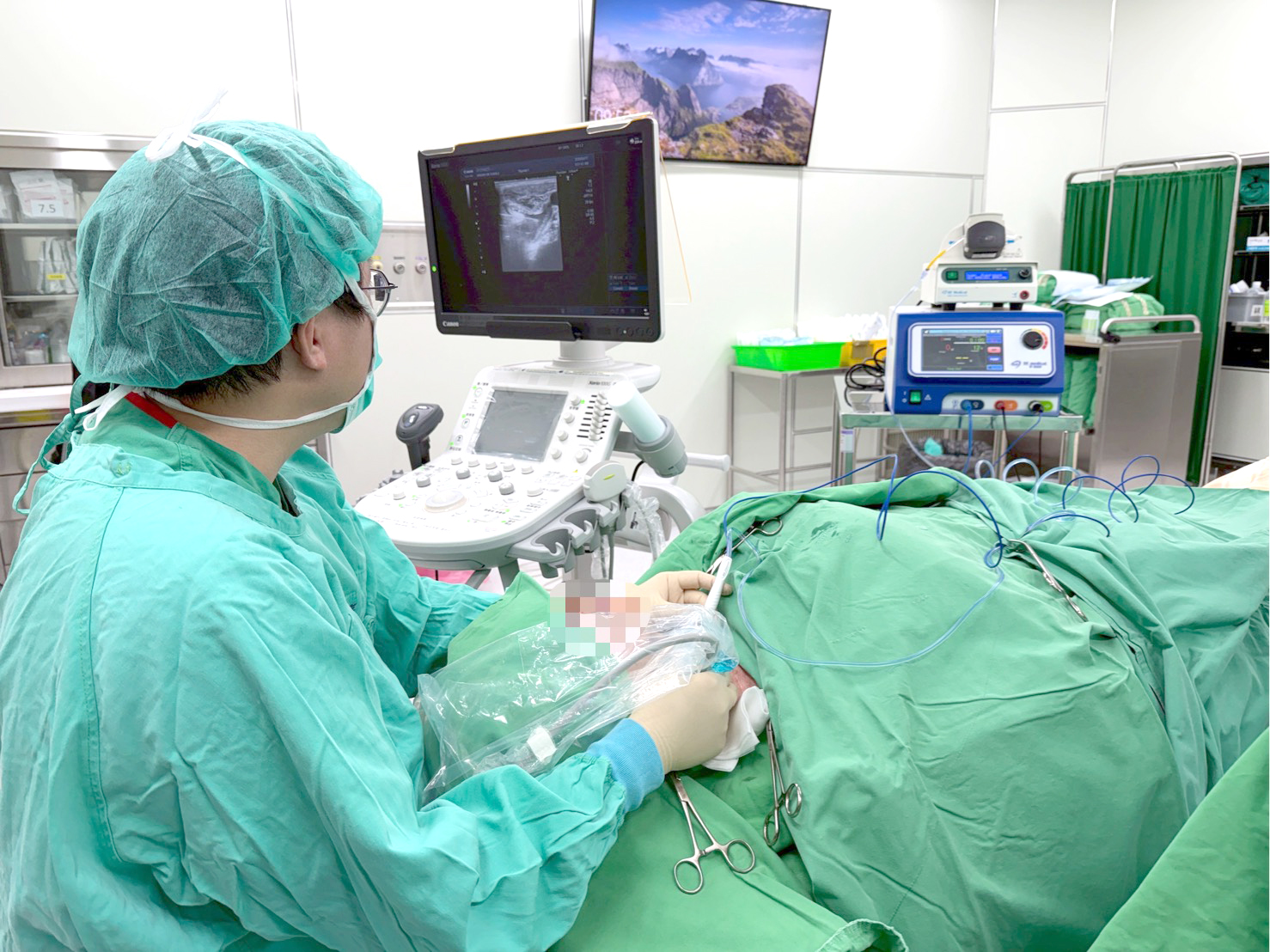
Dr. Huang Tzu-Yen, Director of the Department of Otolaryngology–Head and Neck Surgery at Kaohsiung Medical University Gangshan Hospital, performs thyroid ablation under ultrasound guidance, using a minimally invasive approach to precisely treat benign nodules, reduce surgical risks, and enhance recovery quality.