-Kaohsiung Medical University Chung-Ho Memorial Hospital-
The Kaohsiung Medical University Chung-Ho Memorial Hospital (KMUH) healthcare system has long embedded sustainability at the core of its governance. Through initiatives spanning smart healthcare, green campus development, low-carbon operations, and employee wellness promotion, it has progressively built a concrete and measurable sustainability framework. Recently, KMUH officially introduced the “iPASS Green Transportation Carbon Reduction Service,” collaborating with iPASS Corporation to promote low-carbon commuting among employees. By leveraging real-world data, this initiative operationalizes carbon reduction governance and demonstrates the system’s capability to implement ESG (Environmental, Social, and Governance) strategies in a systematic and scalable manner.This collaboration represents not merely a single-institution effort, but an integrated sustainability project led at the system level and expanded synchronously across multiple affiliated hospitals. These include KMUH, Kaohsiung Medical University Gangshan Hospital, Kaohsiung Municipal Siaogang Hospital, and Kaohsiung Municipal Cijin Hospital.By integrating smart payment systems with green transportation data analytics, the program encourages employees to adopt low-carbon commuting via public transportation. Furthermore, carbon reduction outcomes are translated into quantifiable and trackable management indicators, providing a robust basis for sustainability governance within healthcare institutions. This initiative highlights KMU Healthcare System’s leadership in advancing regional healthcare sustainability governance.
A key highlight of this initiative is the seamless integration of institutional design with employees’ daily routines. EmployeeID cards are embedded with iPASS functionality, eliminating the need for additional transit cards. Employees can conveniently use their ID cards to access MRT systems, buses, ferries, and YouBike services, allowing low-carbon commuting to become a natural part of everyday work life while significantly enhancing participation and carbon reduction effectiveness.Across its hospitals, KMUH showcases diverse and representative commuting scenarios. KMUH has worked closely with the city government to install a YouBike station at its entrance, promoting low-carbon “last-mile” connections. KMU Gangshan Hospital is directly integrated with the MRT system, providing strong infrastructure support for public transit commuting. Due to its geographic characteristics, Kaohsiung Municipal Cijin Hospital relies heavily on ferry transportation, making it a rare example in Taiwan of low-carbon commuting that includes maritime transit. Meanwhile, Kaohsiung Municipal Siaogang Hospital took the lead in launching and operating the program, serving as a pilot site that helped drive system-wide adoption.
The “Green Transportation Carbon Reduction Service” provided by iPASS is based on actual transit transaction records, enabling precise calculation of carbon emissions generated by employee commuting. These data are compiled into visualized management dashboards and exportable reports on carbon reduction performance. All methodologies and data have been verified by the British Standards Institution (BSI) under ISO 14064 standards, ensuring international credibility. The results can be directly used in sustainability reporting, ESG performance management, and future net-zero strategy planning.
KMUH emphasizes that this initiative is not only about carbon reduction metrics, but also about fostering organizational culture shift it represents. By promoting the program across its affiliated hospital network, individual commuting choices are transformed into quantifiable and manageable sustainability actions at the system level, embodying the ESG principle of “people-centered while leveraging institutional mechanisms to drive behavioral change.”
iPASS Corporation also noted that KMUH’s multi-hospital, multi-modal transportation holds strong demonstration value. It illustrateshow a large-scale healthcare systems can amplify the impact of individual actions through institutional integration and data-driven governance, thereby contributing to regional healthcare and urban sustainability.
Looking ahead, KMUH will continue to integrate smart healthcare, health promotion, and environmental sustainability strategies, while further strengthening employee engagement mechanisms and expand the scopeof carbon reduction initiatives. In partnership with iPASS and other stakeholders, KMUH is committed to advancing toward the goal of net-zero emissions by 2050 and establishing a concrete, scalable model for sustainable healthcare governance.
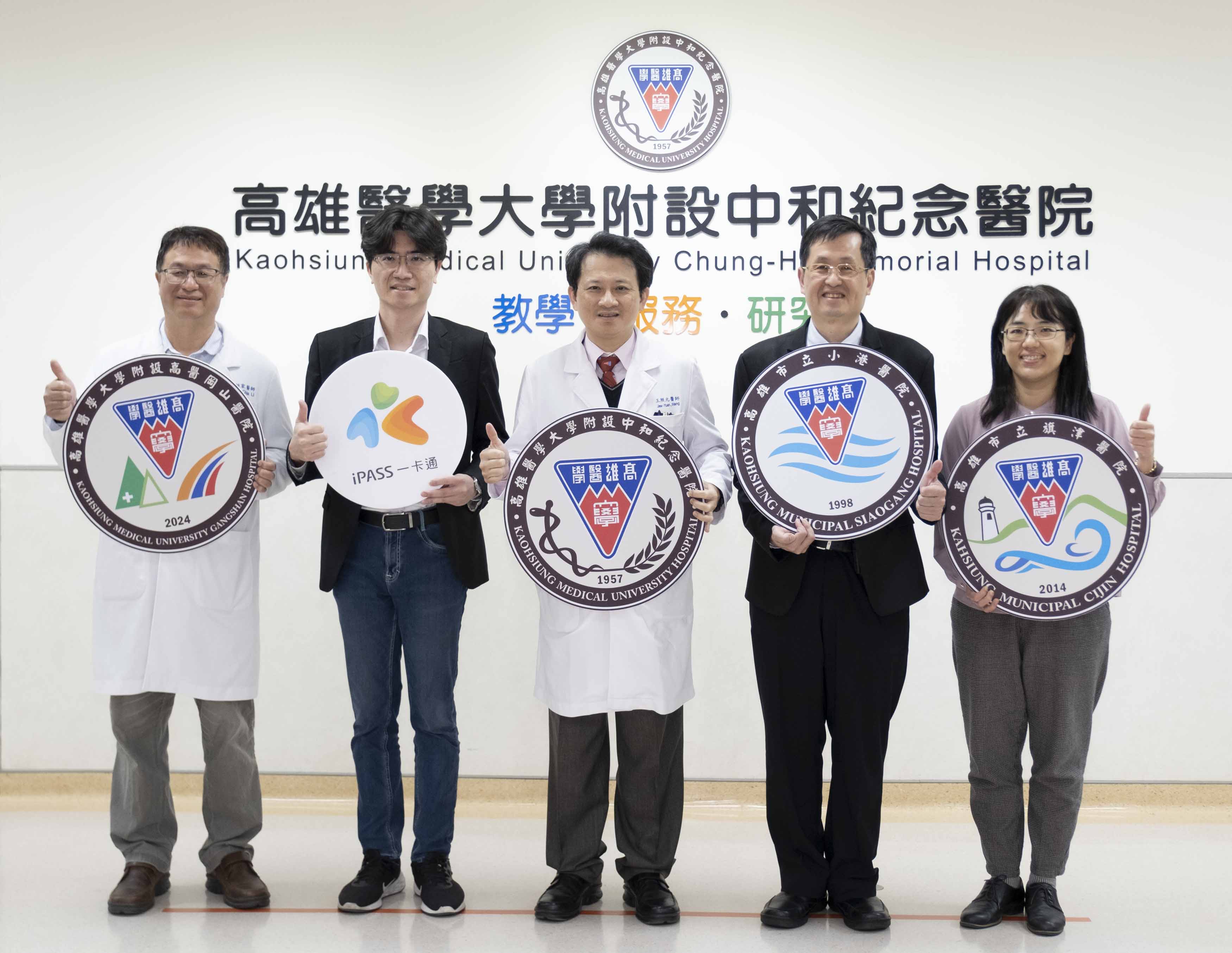
▲KMUH healthcare system collaborates with iPASS Corporation to introduce the “Green Transportation Carbon Reduction Service,” symbolizing the official launch of cross-hospital and cross-disciplinary collaboration. The initiative transforms employees’ daily commuting into quantifiable and trackable sustainability actions. From left to right: Vice Superintendent Ching-Chia Li (Gangshan Hospital), President Kai-Yin Cheng (iPASS), Superintendent Jaw-Yuan Wang (KMUH), Superintendent Chih-Hsing Hung (Siaogang Hospital), Superintendent Yi-Chun Tsai (Cijin Hospital).
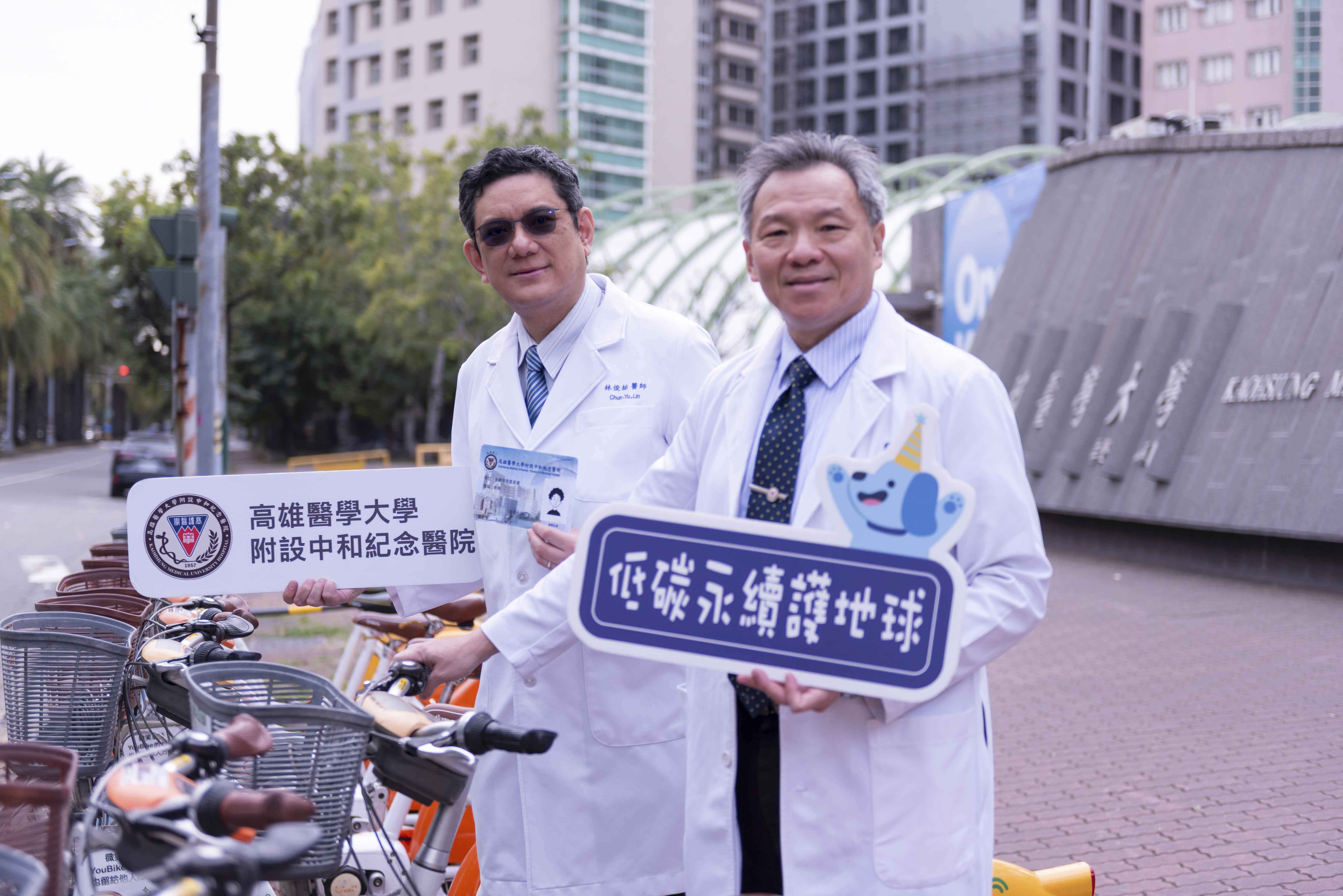
▲KMUH Vice Superintendent Chia-Yen Tai (right) and Medical Secretary Chun-Yu Lin (left) regularly commute via YouBike, demonstrating KMUH’s commitment to ESG implementation from the governance level and its emphasis on driving behavioral change through institutional design.
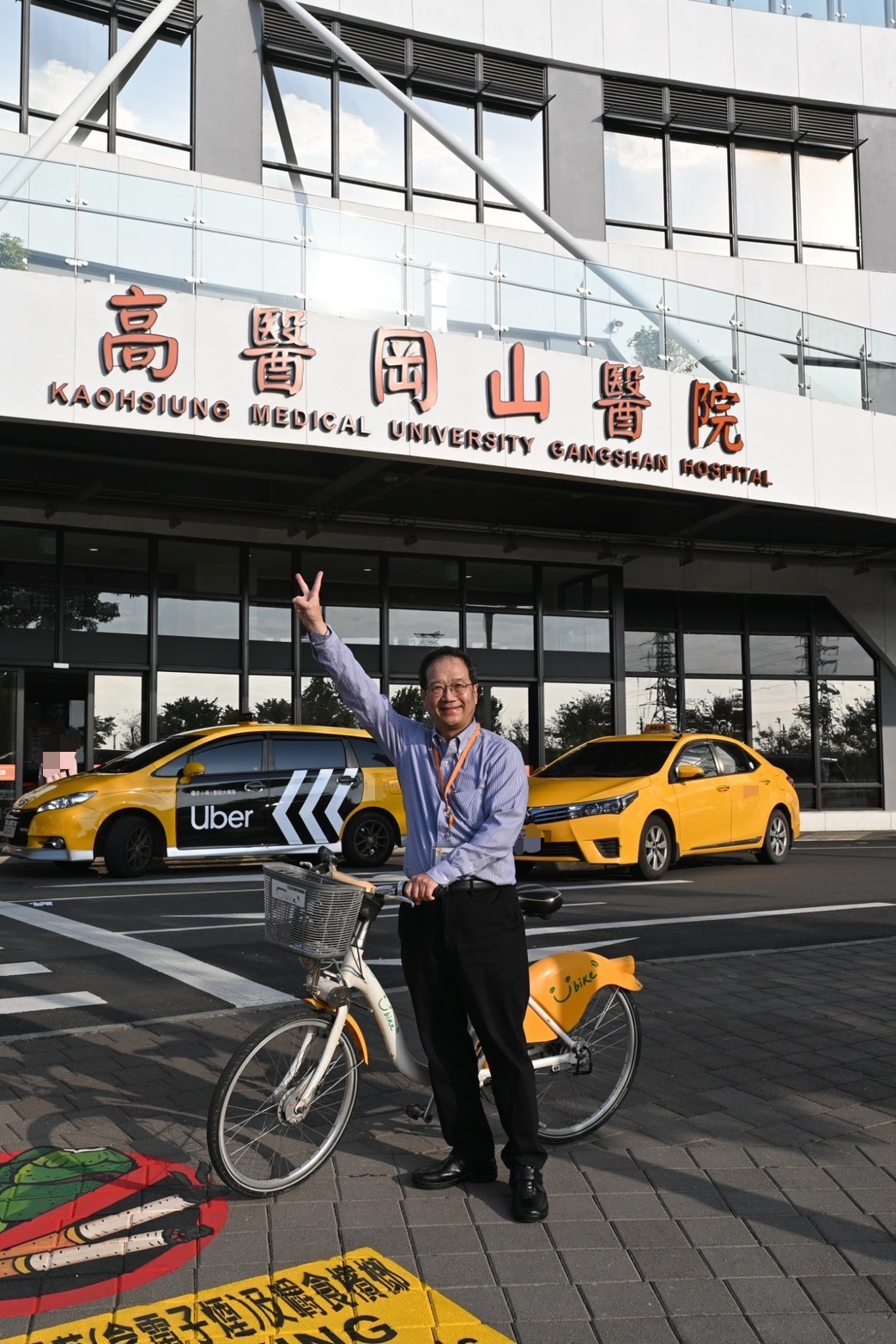
▲KMU Gangshan Hospital is a transit-oriented developmentfacility integrated with the MRT system, with seamless connectivity between the hospital and rapid transit. The photo shows Vice Superintendent Chih-Jen Huang personally demonstrating low-carbon commuting as a practical example of transforming a routine work commute into a tangible act of sustainability.
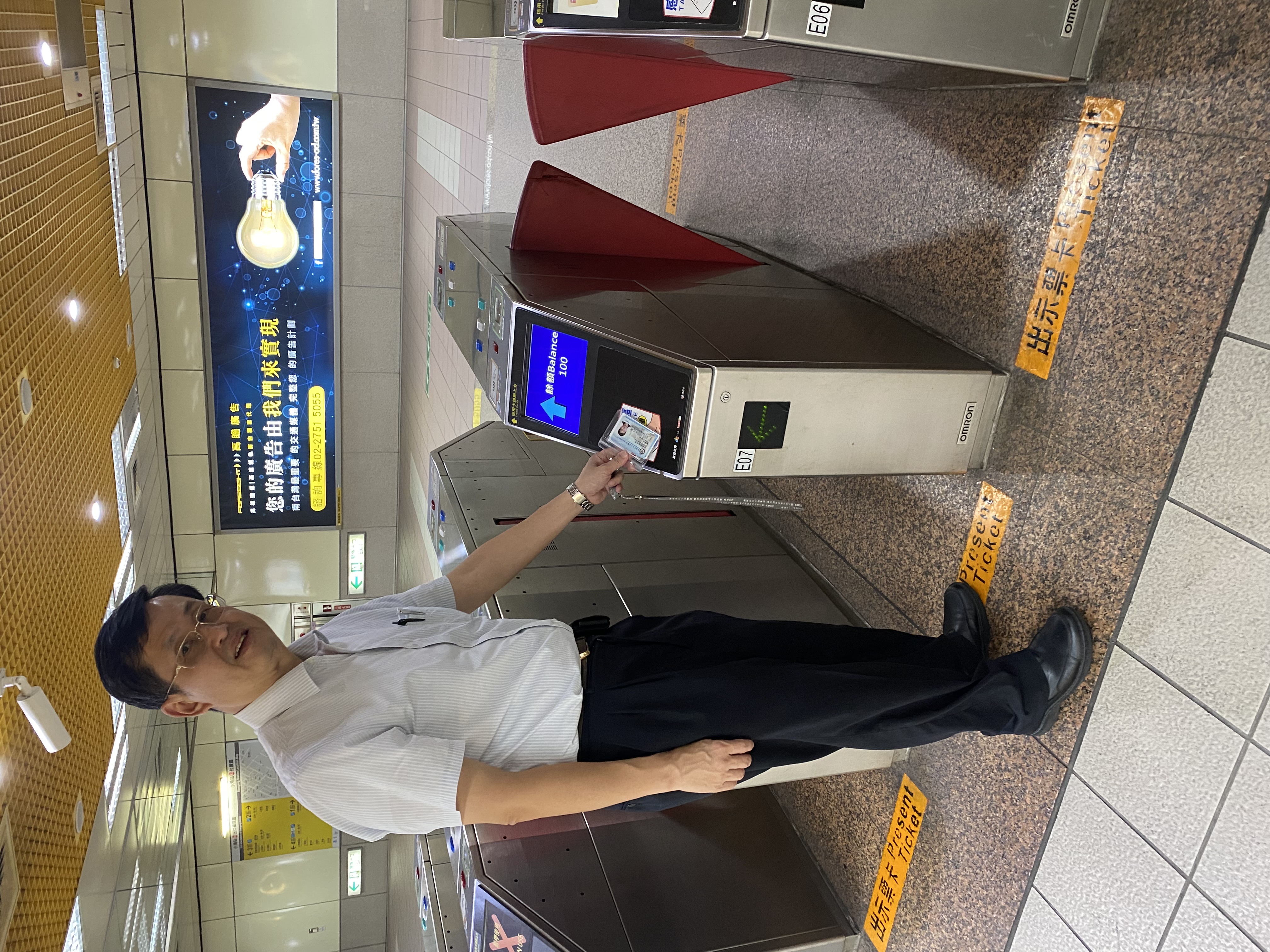
▲Superintendent Chih-Hsing Hung of Kaohsiung Municipal Siaogang Hospital led the team in pioneering the implementation and operation of green transportation, establishing the hospital as a leading demonstration site within the system.
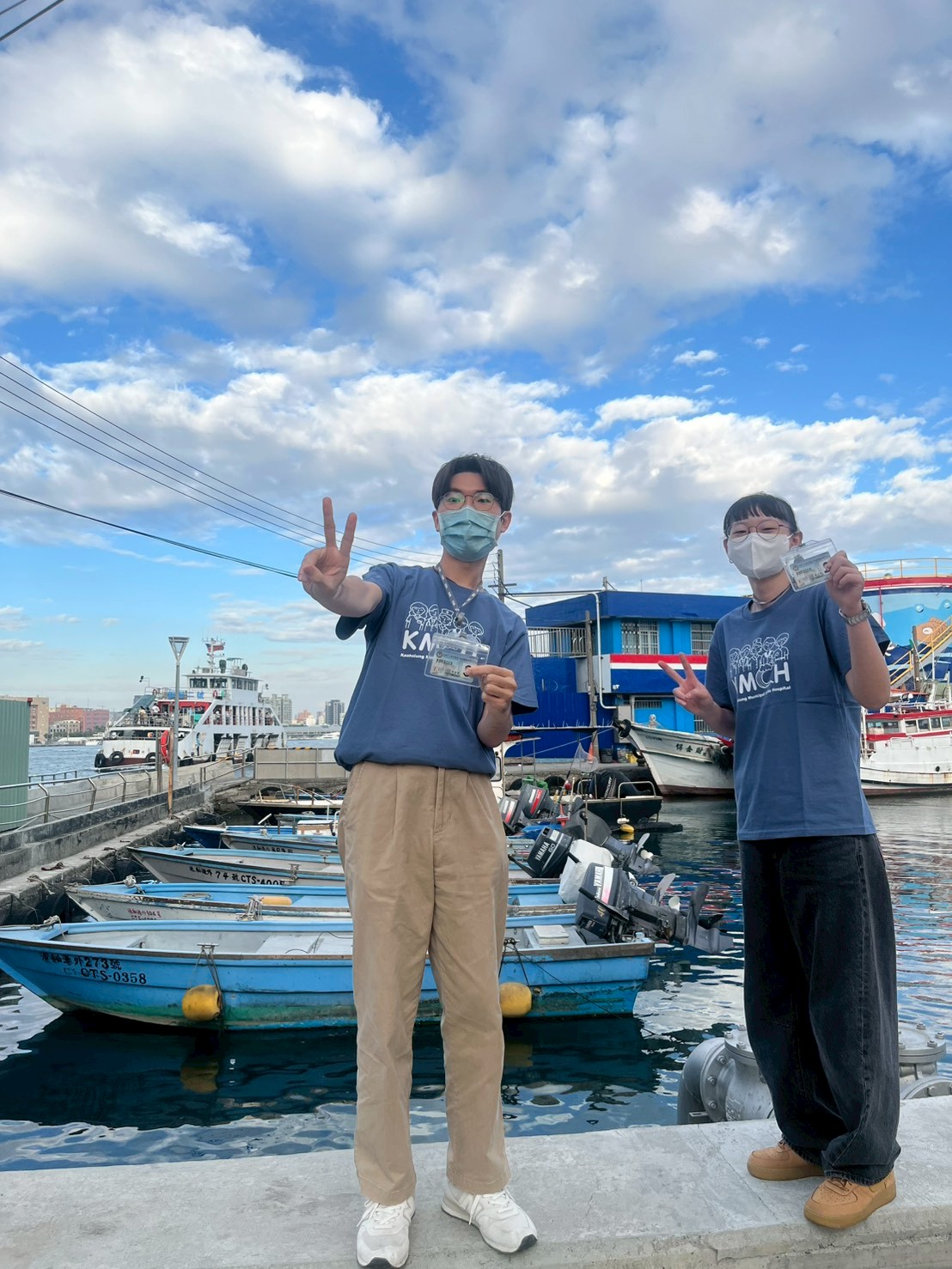
▲Due to its geographic location, staff at Kaohsiung Municipal Cijin Hospital primarily rely on ferry transportation, making it one of Taiwan’s rare examples of low-carbon commuting that incorporates maritime transit, showcasing diverse aspects of healthcare sustainability.
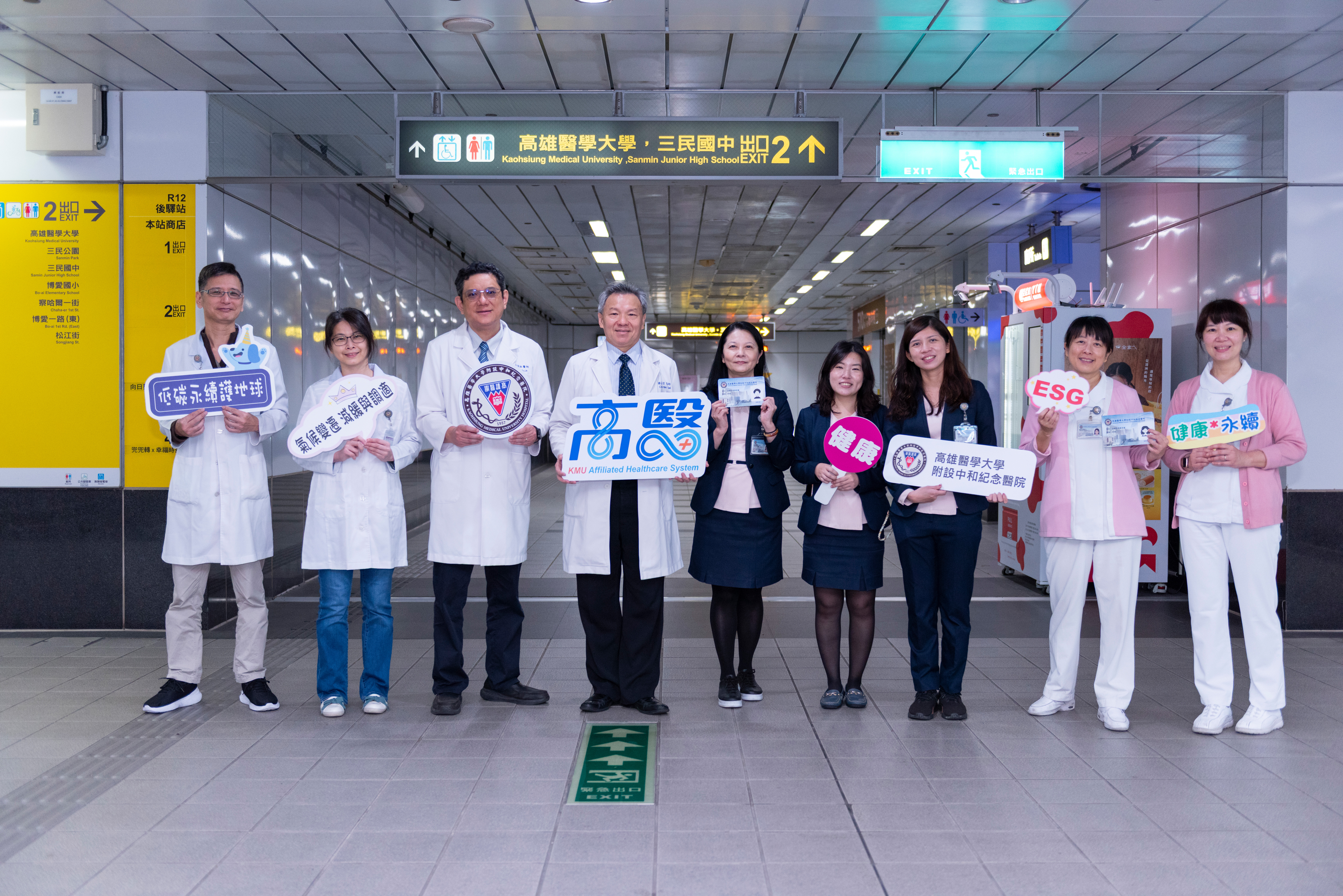
▲From MRT and YouBike to ferries, the KMUH healthcare system encompasses a diverse range of land and maritimetransportation scenarios. With iPASS functionality embedded in employee ID cards, staff canseamlessly integrate low-carbon commuting into their daily routines, advancing green mobility and sustainable healthcare governance.